
Storage Solutions in Bristol: When and Why You Might Need Them
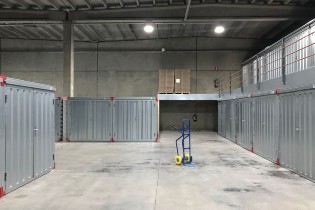
Very few people plan to use storage when they start a move. It comes up later, when completion dates will not line up, or when the new place turns out to be smaller than the old one.
Storage sounds like an extra complication, but usually turns out to be what makes an awkward move work. Here is when it helps, what the options are, and what to think about before your belongings go anywhere.
When storage becomes part of a move
Most storage during a move comes down to a gap, either in the timeline or in the space available.
- Dates that will not meet: completion on the sale lands days or weeks before completion on the purchase.
- A tenancy that ends first: the new place is not ready and everything needs somewhere to go in between.
- Downsizing: you are moving to a smaller property and are not ready to decide what stays and what goes.
- Work in progress: the new house needs a kitchen, a floor or a rewire before it is worth unloading into.
- A staged move: you are moving in phases, or into a rental while you keep looking.
There is also the simpler case of decluttering before a sale. Clearing rooms into storage makes a house photograph and show far better, and it is a common reason for a short booking.
The main types of storage, and how they differ
Storage covers several quite different arrangements and the right one depends mostly on how often you need to get at your things.
- Self storage: you rent a unit and hold the key, with access during opening hours. Flexible, and the right choice if you will be in and out regularly.
- Container storage: belongings are loaded into a container, sealed and warehoused. Usually cheaper by volume, with access by appointment.
- Managed storage: the removal firm handles loading, transport and storage as a single job, so there is far less for you to organise.
For a move where everything simply needs holding for a few weeks, containerised or managed storage is normally cheaper and easier, because you are not paying for access you will never use. If you expect to pull things out week by week, self storage earns the extra cost.
Getting your belongings ready
Things come out of storage in the condition they went in, but only if they were prepared for it. Anything going away for more than a few weeks deserves more care than it would get for an ordinary move across town.
- Clean and dry everything: damp fabric or an unwashed appliance in a sealed space turns into mould.
- Use proper boxes: uniform, sturdy boxes stack safely, whereas supermarket boxes give way under load.
- Wrap furniture in breathable covers: plastic sheeting traps moisture against wood and leather.
- Dismantle what you can: flat beds and table tops take a fraction of the space and cost less to store.
- Keep an inventory: a numbered list, or a photo of each box’s contents, saves opening twenty boxes to find one thing.
Load with retrieval in mind as well. Anything you might want before the end goes nearest the door, heavy items go at the bottom, and a walkway through the middle is worth the space it costs.
What cannot go into storage
Every provider works to a prohibited list, and it is broadly the same everywhere. Petrol, gas bottles, paint, aerosols and other flammables are out, along with perishable food, plants and anything living. Firearms, chemicals and unlawful goods are excluded as a matter of course.
Some things are permitted but unwise. Passports, documents and anything irreplaceable are better kept with you, because retrieving them at short notice from a sealed container is inconvenient at best.
Security, insurance and access
Ask three questions of any storage arrangement: who can get in, what happens if something goes wrong, and how quickly you can get your belongings back.
- Security: alarmed and monitored premises, controlled entry and CCTV are the baseline to expect.
- Insurance: check what cover is included, what it is limited to, and whether your contents policy already extends to goods in storage.
- Access terms: how much notice is needed, whether there is a charge, and what the opening hours genuinely are.
- Environment: dry, ventilated space matters for anything wooden, electronic or upholstered.
Get the notice period and any minimum term in writing too. Moving dates slip more often than not, and a flexible arrangement beats a marginally cheaper rigid one.
Why handling it as one job is simpler
Arranging storage separately means booking a removal firm, booking a unit, hiring a van for the second leg and doing the loading twice. Handling it as one job means your belongings are packed once, loaded once and delivered when you are ready for them. It also removes the part people find hardest, which is not knowing where anything is.
Bridging the gap
Storage is rarely anybody’s plan, but it is very often the answer. If your dates have slipped, the new place is not ready, or you simply have more than will fit, it is worth raising early rather than scrambling in the final fortnight.
We are a Bristol removals company, and we would far rather talk storage through as part of your move than leave it as a separate problem for you to solve. If there is a gap in your move, get in touch for a quote and tell us what you are working with. Our house removals page covers how the move itself works.